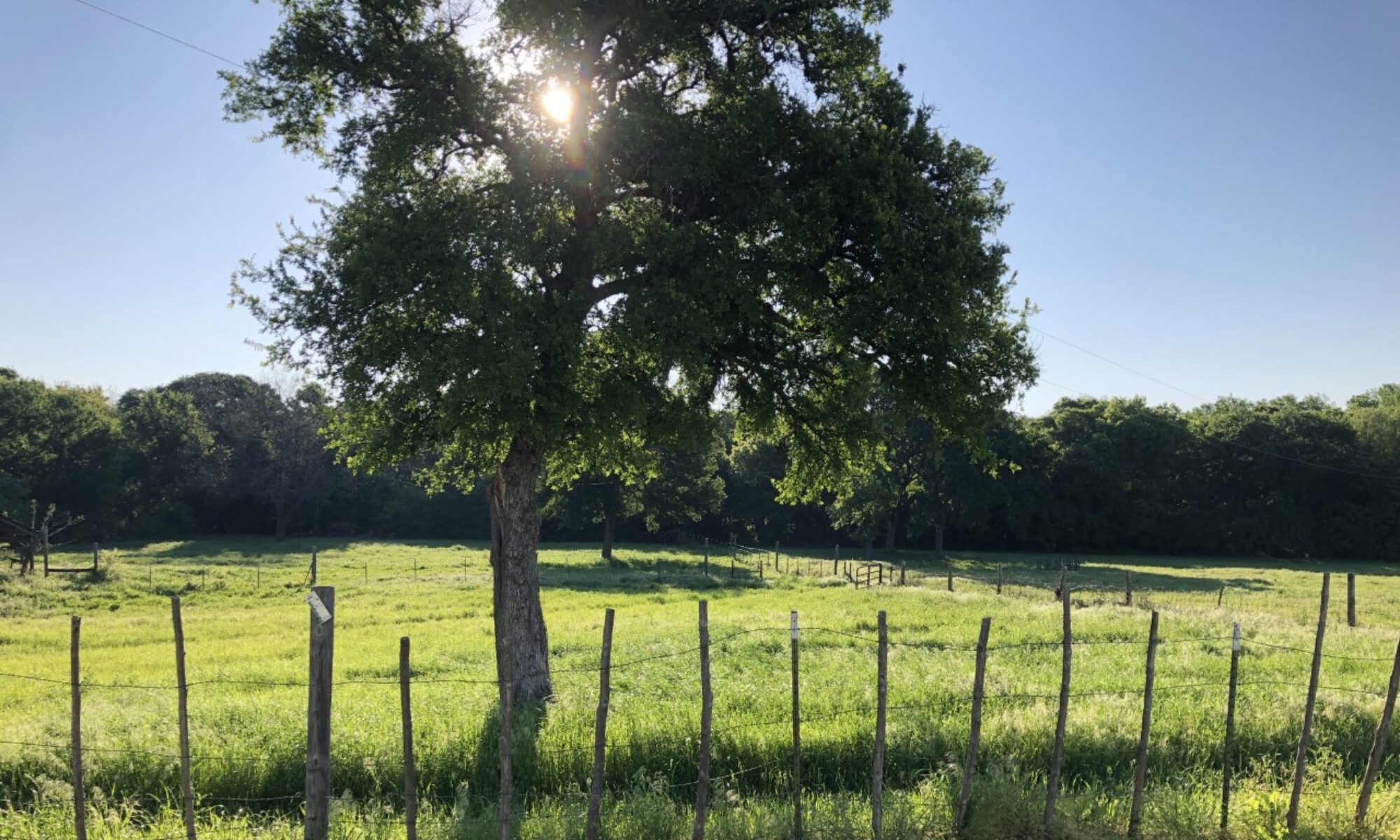
Raising Firewood, Cattle Shrinkage, Family Camping

There’s an old country song by Luke Bryan. It hails from the era of Taylor Swift breaking country music, and carries the fun storytelling that Nashville twanged before pop took over.

Rain Is a Good Thing”

2023 and 2024 were dry. I wrote about it “Wherefore Art Thou Raineo” and because we lived through it, it stands out as a bad time. Grass wasn’t growing, so we had to feed hay as early as July. Hay costs escalate because the grass isn’t growing. Shipping in from out of state works, and costs only money. Much better then the old days without trucks and highways when you had to put cattle down if the grass was short.

Compounding the issue for ranchers was shortfalls of rain in other areas. Hay prices were not just high in North Texas, they were high across much of the cattle country in the USA. Ranchers responded by selling head into the meat market and sacrificing future calving production capabilities. The size of the national herd is quiet undercurrent of our national wealth diminishing in real terms, in real time, separate from the impacts of inflation on purchasing power, and it has accelerated downhill following COVID:

While the mean rainfall in Parker is 33inches a year, the decade after the 2011 drought were ‘bumper crop’ years of rainfall. For ten years trees could thrust every higher and ever wider, an explosive growth period. That all crashed back down in 2023 and 2024.

How do trees respond? They’ve become over extended, stretched beyond their means, living the good life of the roaring twenties on cheap credit and an aversion to future risk management. It’s the boom and it’s the bust, and the bust means the wind breaks off limbs.

We’re talking big limbs, the kind I can’t get my arms all the way around, and they crashed down all over the Raising Wood homestead throughout 2025. For a sense of perspective, in 18 months I wore out a Stihl chainsaw cutting down limbs and dead trees.

Good! Now we can put firewood up for sale at the end of the drive. Laid down some landscaping fabric, found some firewood racks on the clearance area at Lowe’s, picked up some stencils and poly board and Hobby Lobby, and boom, we’re in business as Raising Wood Firewood.

For our family purposes, the revenue is not the primary goal. We’ve made enough back to cover those expenses listed above. What is wonderful is a combined family project, and a tangible leveraging of lemons into lemonade. It would be much easier to grumble about breaking trees and leave them to rot on the ground for 5-10 years. It is much more fun to convert them to firewood. They are the right size that every child can help with moving, stacking, and racking them. We can all delight together when someone venmo’s $6 to Jenny for 24 pieces of wood they quietly picked up from the rack.

Bottom of the trailer is entirely firewood

You also have plenty of wood to camp with. We joined a church group for a camping trip at the end of October and provided the firewood for seven families, which is cultivating the joy of generosity for each of us.

Speaking of camping, the boys have taken to it with great zest:

And speaking of down logs and chopped trees, finding a beaver dam was a fun time:

And speaking of a fun time, how about a David vs Goliath cast iron cookoff?

And speaking of a cast iron skillet, guess who is having the most fun cooking?

Life is good and we are blessed. Lemonade from Lemons is antifragile.

On the topic of drought, lemons into lemonade, and woody growths: Mesquite trees have an inverse relationship with dry years. Everything else withers, and the prickly mesquites grow stronger. Helps keep the soil active and fights erosion, which is nice. Stabs tires and hands, which is not. However, I have two strong boys with saws who were delighted to be paid 25 cents per stripling they cut down for the burn pile.

They each made some good money, learning some responsibility and task management along the way. Then we roasted marshmallows over the coals, because nothing tastes better then thorns turned into ash.

Small decisions steadily made become habits, and habits become character. Much of what we do at Raising Wood involves this habit forming, character creating process. So i noticed one morning a visual example of that development.

Our firewood rack for home use is stacked up against the fence at the top of the yard. It runs over a hundred feet and has fruit trees between the fire pit and the firewood stack. Over time, the result is that the wood behind the fruit trees remains high and untouched, while the wood that is a straight line walk from the firepit to the wood rack is readily consumed.

Finding these blind spots is an opportunity for improvement and refinement, both in our physical space and our own personal character. Making lemons into lemonade, one day at a time.

She Gets It

Dropped Lelee the heifer off at the butcher Friday morning.
Two year old is crying while we drive home.
“Are you sad she’s gone?”
“NO I WANT TO EAT LEEEEELEEEE”

The result of finding the hens laying in the goat hay feeder after a few days

Shade for Fertility

Joel Salatin goes by many names and titles. One is The Lunatic Farmer. He tries new things, keeps what works, and rejects what doesn’t. If you’re engaged with the regenerative agriculture movement in the USA, you recognize he’s an inspiration to millions (and a profitable farmer to boot).

One of his ideas for pasture management is using temporary shade in open fields. It can draw cattle into low growth patches of grass. These Cattle loaf in the shade and then take care of their business in that shade. They ain’t shy. That fertilizes (‘manures’ as the old timers say) the soil and builds water retaining organic matter. Give it some time and boom, explosive grass growth.

Salatin has a very good book on projects for the regenerative farm: Polyface Designs. Where most farm build books are heavy on pictures but lite on specifics, this book skews heavily to dimensions and step by step CAD rendered build processes.

To make a shade mobile, you start with a hay wagon. One popped up on Craigslist for an absurdly low price, on account of some damage to the hay holding frame. Well we don’t want to hold hay on the hay wagon, so it was perfect for us.

Remove the broken hay holding frame. Extend the back axle to maximum length. Build some uprights. Bolt them in. Brace them together. Straighten out the broken frames. Weld them to hold the straightened repair. Bolt them to the uprights. Add crossbeams. Paint all the wood. Add shade cloth, which is landscape fabric right now. Screw boards in from the top to sandwich the cloth to the crossbeams, maximizing the clamp surface area to minimize wind tearing the fabric.

Then pull around with the quad atv and turn the cows loose to loaf in its shade.

It’s late enough in the year that they don’t care much for it now. But I am looking forward to next summer and the revitalizing power of the shade mobile.

Or if it doesn’t work, then convert it to something else. It’s all an experiment.

Spring Cometh

Spring is here. Beautiful time of the year. Everything springs to life. Doors and windows stay open. With the Four Seasons, noted time traveler Vivaldi captured a bit of this energy. Let’s see what’s happening with four movements here at Raising Wood.

Our open market economy sells trees in pots RIGHT NOW because everyone has the itch to plant them. Jenny is reworking a peach tree from 3 years ago in this picture. Cardboard base, heaping piles of mulch, and deep watering all go together. There’s fruit budding on this tree now and we should get our first harvest off it. Jenny also planted some fig trees and has plans for pear trees. There is a lot of excitement about future harvests around here, even before we address the berry patch invitations.

Mesquite trees are a pain. Literally, full of thorns. They grow in the pasture and need to be be taken out by hand. Or, alternatively, you can water around it and let pasture pigs waller around it to destroy it. The pigs like this option. So do I.

Goat mothers are interesting creatures. Dot here gave birth to twins. The boy is enormous and thriving. The girl is rickety and slow. Dot recognized this from birth. She triaged the situation by focusing all her care on the boy while comprehensively neglecting the girl.

Fortunately we’re accustomed. Now we have kidding pens to set up our own triage. Five days of keeping them separate from the herd. Four times a day forcing nursing sessions for the little girl. Three goats learning to be a family. Two determined shepherds. Now one self standing and self feeding girl goat. Success is satisfying.

2am. The flock guardian Ashok is barking in the pasture. Jenny investigates. Jenny sees the problem and rouses me from bed. There is a dead chicken in the meat bird tractor. Cause of death matches three chicks from four weeks prior. The head is fine, the organs are fine, the neck is fine. The legs and thighs are sliced into chicken burger and feathers are everywhere.

Turns out Ashok was barking at a 3ft tall owl. Jenny watched it sneak talons under the lip of the tractor to grab chickens l. When the chick was 12oz, it was a good snack. Now these birds are 7lb and they don’t fit under the frame. Owl doesn’t care and just tears off a talon full of thigh meat.

I can’t always tell when an owl will show up. I can add a PVC pipe flap on the gaps. They are working for a week now and no more sliced up birds.

Well, not til we process them in early May to fill the freezer, as is right and proper. Happy spring y’all.

He is indeed. Now there’s a bird nest behind this in the shop

2024 Grab Bag: – Incremental Improvements & Answers

2024 was our smoothest year. After 4 years of tweaking, adjusting, improving and optimizing we had the lowest ratio of labor + chores : production yet.

The biggest improvement this year has been integrating two boys (now 7&9) into dog and chicken management. It is a daily task to manage feed and water for the Livestock Guard Dogs and the Hens, as well as collecting the eggs. They are compensated per egg, so it varies by the day. They are really quite good at it and I’m proud of their efficiency in the task.

We cleared a huge range of branches on the north end of the pole barn and replaced a broken gate system. While we did the replacing, we went ahead and moved the placement of the gate to better fit our trailer access needs. Incremental improvement!

You will notice the red Packout tool storage system on the 4×4, and also in this picture in the house while I remodeled the bathroom. Huge time saver, a lot less walking back to the shop and much faster access to each tool, because it always has a home. Even for a DIY Homestead grade guy like me, this system is worth the investment for the time savings.

On the topic of organizing tools: Love getting the extension cords off shelves and workbenches. Now there is a single hanging organization system, another incremental improvement that pays dividends. When it is time to string up cables for deicing water tanks, easy access to each cable.

Family nearby replaced their wooden garage doors. They kept the wood for me and I converted them into worktop and shelving space in the shop. Nice improvement in feed & supplement storage and access for a low cost. Milk crates fit perfectly in the second level, making organization on the shelves a success. It’s a wonderful feeling when the shop is a asset to walk into, not a liability you groan and try to avoid.

While we’re in the shop, let’s talk about these Enbighten wifi electrical outlets. Originally I installed motion detecting LED panels in the shop. The idea was they would auto off when I was not in there at night. It’s a great plan, except the cats keep the lights on most nights. The shining is annoying in my bedroom window. Now I can turn them on and off from an app on my phone. Additionally, I can manage the electric fence remotely from the phone. Find a break and need to fix it? Turn the fence off. Make the repair. Turn it on. Huge time savings for electric fence maintenance, easily dozens of hours in a year. Incremental Improvement!

Since we’re looking at extension cords, diligent children, and a home remodel, check this out. There’s a green extension cord on the right side of the driveway. That 300ft of connected cable is there because the boys wanted to get our Nativity scene set up at the end of the driveway. I was in the middle of fussing with replacing trim and said “go help me by getting the power lines out there.” They knew where the cables were in the shop and ran them out without assistance. They were proud of their work, and they should be. It was a great help and gave them skin in the game as we set up the Christmas lights together.

Looking at equipment that drags gear around, sometimes you just barely manage to finish chipping wood and get the tractor in the barn while the steam is blowing out the radiator. Not a great feeling, and this is going to be some time investment to find the root cause and remedy the overheating.

Since we’re in the barn, time for hay! We haul the cattle hay around on the utility trailer. To feed the goats, we tip a bale over and cut it open, then peel hay off to toss into the feeder systems. I just like this pic of the girl and the goats playing around, so now you get to see it too.

Jenny developed an incremental improvement to this feeder from last year. She salvaged broken halves of 5 gallon buckets to make a new hay base . This prevents the tiny bits of hay from packing together and cementing the bottom of this wire arrangement and encourages more comprehensive eating of the hay.

Another Jenny concept: Affixing sheet steel on the north end of the barn. This greatly improves the storm resistance of the goat area in the winter. In the summer there’s still plenty of cross breeze to keep it from overheating. This expands the functional area of feeding hay to the goats, resulting in a healthier flock over winter.

Down at the south end, the other half of the flock has its own area. Jenny’s idea (see the theme?) was to add a passthrough gate for the farmers to farm better. Now it has a gate. Incremental improvement worth 2 minutes a night for 100 nights each winter. That’s time well spent.

You may run the numbers in your head and say “Well Robert, that took you both 3 hours to arrange and install. That’s 6 man hours. Not a good investment, that is a 2 year return to your labor!” To which I will say, “any minute saved on a daily chore is a minute farther away from frustration, annoyance and burnout. Taking 3 hours on a nice Saturday to make this a joyful experience for the family year round is worth it. Or in economics terms, the opportunity cost of our labor every night is high compared to the opportunity cost of a slow and peaceful Saturday morning. See also, that smile up in the pic.” Incremental Improvement!

A picture of a kid with a kid with another kid in the background is a good segue to some of your questions following the latest chicken processing day:

Q: “The air drying: I had not heard that needs to be done, I assume this is because you give the birds all a good rinse and just want to keep that moisture off of them for freezing?”

A: Bird skin will struggle to crisp up if it’s frozen with soggy skin. Drip/air drying helps with that. Eviscerate on the table, spray off with a hose, dunk in water in a utility sink for 10-20 minutes. After it sheds heat in the sink we move to a cooler with ice. Target is under 40f within the hour. The joints will feel stiffer when cold. Then drip/air dry for 15-20 minutes with those stiff joints. I run a big shop fan on low to keep air moving over it gently. Longer is fine too.

Q: “For bagging, you’re not using a vacuum sealer or anything, but the bags look nice and tight to the bird. Are you just dipping the bag in water to push the air out and then sealing it?”

A: I fully recommend these, We use them because Neighbor J.P. uses them because he learned to use them on a nearby pasture poultry operation. 100% success rate for both of us. texaspoultryshrinkbags.com/products/10-x-16-shrink-bags Unless the bird is over 8lb, then we size up to the turkey bag. There’s a straw that goes into the bag in the cavity of the chicken. When you dunk in 195f water the plastic begins to shrink. Remove from water. Pull the straw out and tighten zip tie completely with pliers. Let the bag dry and then label with included labels, which have excellent adhesion.

One for the road folks! There’s always some Wood to raise in 2025, Godspeed on your endeavors.

Raising Wood Tuesday

It’s a Tuesday morning and the sun is rising. Take a look outside and there’s a herd of cattle chomping on short fall grass. They moo’d at you last night because they aren’t ready for hay yet, and the human must know.

Ah! The day has started with a birth. Momma Layla is 8 days past due, and is past due no longer. Little calf on the ground. She’s a great momma and needed no help, and is slightly removed from the trampling feet of other cows.

Alright little guy, lets give you a check over. Breathing, strong neck, has eyes and ears and lips and tail and feet. Still soaking wet and covered in the softest fur on the farm. The tail is oddly curly, but nothing much to do about it. Oh, it’s a boy!

Go forth young bull, find that milk. Our work here is finished.

Go back inside, get to work on career job stuff. Finish work, bundle kids to Brazilian Jiu-Jitsu class, come home, dinner, read bible and pray, off to bed. Jenny goes to check on the meat birds. We just moved them outside the day before and they should be downright giddy on their grass still.

“Robert we massacred the chickens!”

“I’m sure it’s not that bad.”

“No! There’s at least ten dead!”

Sure enough, 10 of the 45 birds over heated in the day. We made some shade adjustments and monitored the next day. A handy roll of radiant barrier was in the shop. One of the cats kindly ripped holes in it for her claws. Now it has a new use for protecting sensitive chicks from the sun. We haven’t lost one since, but it was a day wrecker.

Well, since we’re out here anyways, let’s see how the new heifers are doing.

We drove 2 hours each way on Saturday to pick these up near Temple Texas. Stopped at the world famous, Texas sized gas station, Buc-ees in Hillsboro. If you go around the back there’s a bulk chemical tank for their BBQ sauce.

A young man and his wife have their first child due this week, reasonable possibility it was on this Tuesday. He picks up calves on the fringes of the auctions nearby and bundles them together for buyers like us, also on the fringes of the system. He gets to pay bills, we get to build the herd for next season. These three heifers have mingled in nicely with the herd. All in all, not a bad Tuesday.

Expanding Coverage

One challenge with raising goats is keeping them dry in the winter. When they are dry they can take real cold, but all bets are off if they get wet while cold. Given Texas weather patterns it inevitably rains to drive our cold snaps into place.

Jenny hauling steel

Time to expand our coverage footprint beyond the barn. The back of the work shop has space and matches our workflow well, so let’s get to it.

Paid the boys to yank some long steel tubes out of this area, they worked together and dug them out quickly.

We ran some boy goats here in the spring and it worked well. You can see the hay feeder we can throw hay in from the ramp. Now clear out the trees and brush. Mark out post locations.

Oh, we need some posts! A legacy telephone pole fell in the front pasture last week, 25 feet long! A little sawzall work and now we have two of the three 12ft poles.

Huge cost savings

Next is marking a level horizontal plane to reference from. The ground isn’t flat, so you use a level and a string. This helps mark how deep the posts can be set so they are the same height at the top. String is a legendary building tool. Keep it handy.

String!

Next is running the auger, setting the posts and verifying they are level. Then attempt to hold the posts straight vertically with wooden braces while the concrete sets. Mixed results with acceptable outcomes for me. DIY grade. Recognize afterwards the posts are not straight cylinders but taper, so the level wasn’t reading on a straight surface. Now run the wooden stringer along the building, checking level along the way.

Then set the stringers along the posts. Deep timber screws to anchor them into the posts. Use long boards leaning against the post to rest stringers in place. Check constantly for level.

Start cutting rafters to connect the stringers. Then realize they are all different and unique lengths and you’re not as hot as you thought you were. Plod forward accordingly. Feel pretty smart about a jig to hold the rafter up while you fiddle about on the ladder on the other end.

The jig to hold the wood. When finished unscrew from the bottom and move for the next board.

Feel great because it’s all coming together and man we’re crushing…hey what’s that pig doing?

Taste-testing every. Single. Cutoff.
Jig on right side to rest the rafter, climb up building ladder to attach, then climb post side to to finish fastening.

Then wonder how you managed to break an aluminum speed square.

Cut off the hang off and move the wood for the stringers to the top. This is the wood the steel will fasten on. Cut sheet steel to right length for the two parts required on top.

Much easier to work at this stage. The up and down the ladder sequence is no longer in play. Just keep your balance, mind your measurements and drive in screws.

Ashok is pleased with the shade and has driven the pigs from the pasture

Pull the sheet steel up. Fasten from the bottom edge first, overlapping those sheets from the top. Pull out caulk gun to secure flashing between roof and building. Mutter and murmur over the cordless gun being broken and it’s already been warranty replaced and and the sun is setting… I’m not finishing tonight and if only I had done x, y, and z more quickly earlier…

Running numbers in my head as I pack up for the incoming rain. Half day of material acquisition. Two and a half days of work from start to finish. Probably another day ahead for painting to protect the wood.  Was it time well spent? We’re deep into the payback phase of buying tools to improve quality and save time. With work it pays back deep dividends, and I enjoy the building.

End result is 30ft long x 16ft deep x 9-12ft high of great utility covered space. Sweat equity is real. Not paying a contractor 3-4k is good value. Growing the farm as a family is even better.

Then I go down to the barn. Now one of the momma goats is getting work done and my wife and daughter are there for it as the sun settles in the west.

Turns out, the shelter for the goats is going to be just fine, even if it’s finished a few days later.

Build Beef Better

What is good? Beef is good.

What is better?  Managed Intensive Grazing Grass Only Beef.

What is best? MIGGOB born and raised on the Raising Wood homestead. From artificial insemination to birth to weaning to weaning again because he reactivated his momma(!) to the steering committee meeting to feeding out through two winters, Yum was the first beef fully ‘ours’. We think he’s quite simply the best.

First time customer chimes in:

We usually require a deposit on a share before taking a head of beef to the butcher. I failed to do that this time, and a customer backed out the day after we started the processing. Fortunately we had other customers looking for a share and everyone ended up happy.

Sorting frozen beef

A typical question is ‘how much beef is a share of beef?’ Yum was our largest head to date. A quarter of his beef was 97lb. 97lb of beef fills up two 50qt coolers in delivery, or about half of a 7 cubic foot freezer.

Freezer with frozen beef

We enjoy running delivery to our customers. It helps ensure a chain of custody with temp control. It helps move the beef out into its freezers more readily, and delivered beef makes happy customers. It is good to know your farmer, separate from the commercial chain of sales and distant don’t-think-to-hard trust requirements.

Two coolers ready for transit, loaded with frozen beef and ice
Looking great on the hoof
And afterwards

When Winter Comes

North Texas has a long and hot summer followed by a random autumn. Highs from the 40’s to the 80’s, lows from the 20’s to the 70’s. Then spasms of winter compete with autumn and spring from Thanksgiving until Easter. Highs in the 20’s to the 70’s, lows in the 10’s to the 60’s. It’s beautiful and erratic and helps you feel alive.

Here are some tips for running temporary electrical infrastructure on a homestead with active animals.

Priorities:

1. Keep all electrical pixies where they belong

2. Manage stock water to be always safely accessible. (Let the deicers do the work.)

3. Zero damage to water infrastructure.(Drain yer hoses.)

Everyone wants to avoid this

Here’s my work process:

Residential panel boxes are safe to open

First, open your panel box and understand the amp rating on your circuit breaker. This will tell you how much you can run off the plug in the wall, as a safe system has all components rated equal or greater than the circuit breaker capacity.

These are 20amp, they are commonly 15 in household boxes

Now take the watts rating of your deicer. Convert them to amps at 120 volts. Designate type as alternating current (AC) in this calculator: https://www.rapidtables.com/calc/electric/Watt_to_Amp_Calculator.html

Use outlets with Ground Fault Current Interrupt capabilities. If it’s the first outlet in the circuit it covers all outlets downsteam. This will immediately disable the branch in the event of a grounding issue. Examples are water ingress or broken components.

Now you know the amps of your deicer and the capacity of your circuit. Match extension cords to the application. Going big is always acceptable for electrical systems.

Outdoor rated, because they’ll be outside. Lighted plugs because that gives me information at a glance if the system is working.

12 gauge wire handles 15amp/1875 watts. On a 20amp circuit I can run a 1500w de-icer and a 250w de-icer safely and continuously.

When you use a splitter, verify the amp rating is at least as high as your extension cord. In this case it is 15amps splitter on a 12amp cable set.
Physically inspect your cable’s insulation (colored plastic) for physical damage. Vermin chew on them. Cover securely with quality electrical tape like Scotch 33+. This is not suitable for industry or contract work but it works in my residential setting. Beats exposed wire.

Now that you have your components figured out, it’s time to put it together.

As much as possible run on top of fence lines. If the cable is on the ground it will be tripped on. Whej stepped on it will damage the cable. Perfect your time and investment and run elevated.

Leave 5 to 10 feet of spare cable at each end, so as to have extra capacity when it is yanked on.

Work to secure the cable at multiple points along it’s travel path. I find an overhand knot, the first part of tying your shoes, to be the simple way.

These over hand knots are of particular importance where junctions occur

Finally, if a junction is on the ground and any source of water is available I like to secure it with a weather box. These are like $4 and last for years. Make sure it can accommodate your cable size, some do not handle 12 gauge he may duty cables. This also acts as a strain relief in the event a cable is yanked on.

Don’t be this guy
Winter without deicers, ice holds a cow on top
Until it doesn’t. Just run the deicer safely and avoid the impromptu swimming party opportunity

Oh, one more thing:

Hot Days, Dry Days, Hay Days

Texas in the summer. It’s hot. Has been my whole life and will continue to be hot. Last year was an extreme drought, this year is a regular drought. So grass is dormant and we’re back to hay.

Yum the steer, Leeli the new calf, both born here on greener grass

We finished up the hay from the winter buying and realized all of our delivery hay contacts were out of hay. So we’ve been hauling two at a time on our trailer. Ten bales now in the barn.

New to us heifer Amber with the cream color

We added a new heifer Amber to the herd this summer. She has high end Beefmaster genetics and has grown on range grass, perfectly in line with our development goals. The target has been to run two breeding cows, two growing cows and two finishing steers on a revolving basis. We are there now and will see how the plan works in reality.

We also added some kittens from a friend. One made it past the first two weeks, the other passed with some parasites we were unable to treat effectively. The laughs were fun though and we managed to keep both grown up cats in this new kitten process.

Nom nom

We had three hens die in the shade this week, which did not happen last August. We’ll be developing the breed to higher heat tolerance as this continues. Egg production is way down, 10 layers giving 2 to 3 eggs a day because of the stress. Fortunately we have been hatching and raising more as the summer progresses so the farm team pipeline is strong.

We did have a baby boy goat who struggled with parasites and weight gain. After a week of two or three time a day intensive care and treatment, he’s back on his feet and feeding on the range with the rest of this scrappy herd. They are delightful to watch prosper on scrappy drought land. They keep an antifragile edge to our meat on pasture production process.