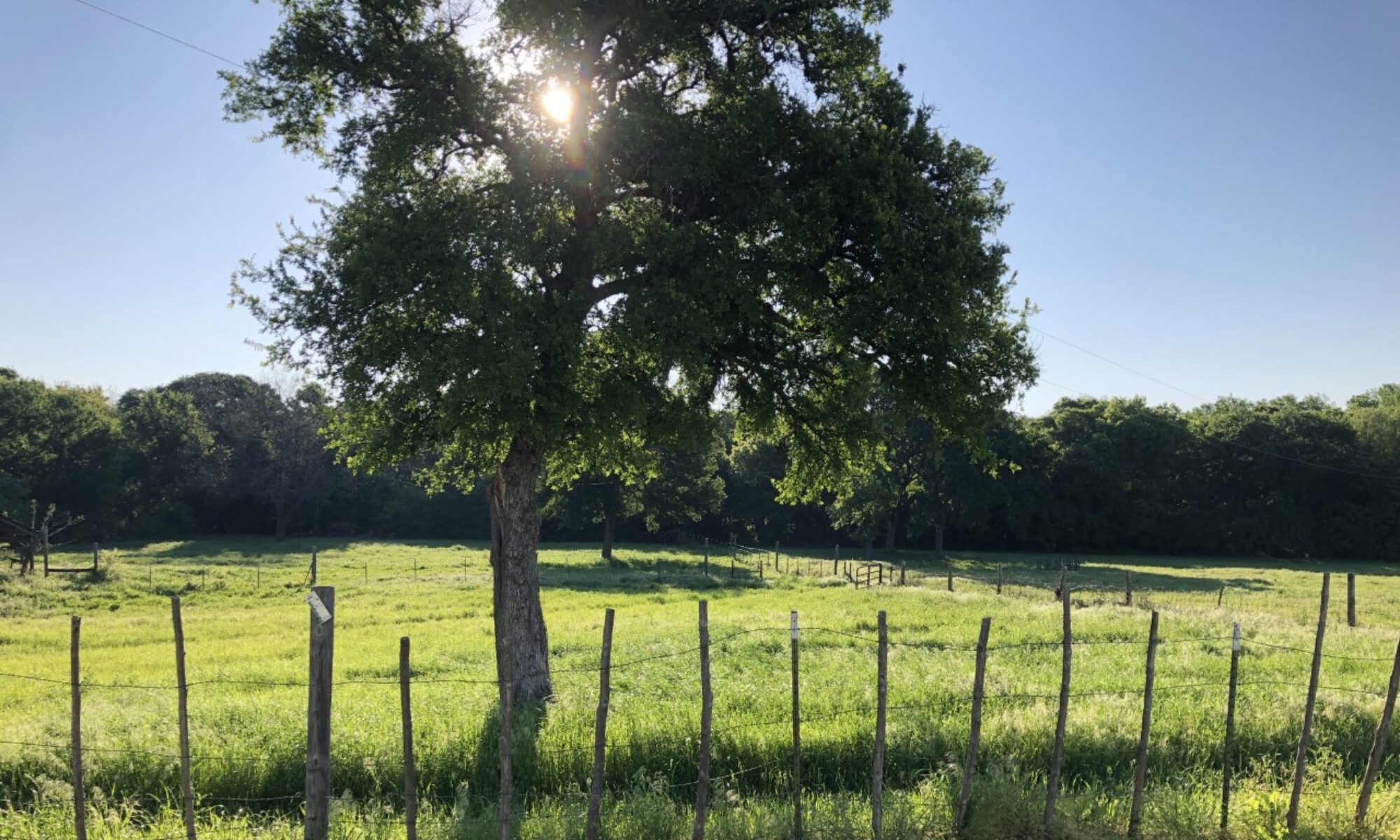
Spring is coming and we have done a lot of blending livestock with each other to make feeding easier this winter.
Our livestock guardian Anatolian Shepherd, Ashok, has taken to preferring goat feed over dog food. He’s also sleeping with the Kune Kune pigs and playing with the bullcalf Yum.
In his spare time he’s also started fights with his pops and eaten a chicken, so there are some problems.
Let the wash begin
Cattle in herds take care of grooming each other. We see them lick fly ridden areas on each other and rub on areas the tails can’t reach. They also give the piggies a bath. The piggies will come up and roll over for a good solid lick down and then wonder off again. Complete surprise to us.
Let’s play paw-to-hand through the glass
The cats are also friendly with the kids, through the door way. No cats in the house!!
Managing the hay access has been a challenge. The pallet fences that worked so well to keep the goats and cows out of the hay bales all summer and winter are failing. Given the thousands of pounds of beef weight shoving them around, that only surprises a city boy like me.
But why though?
The bullcalf Yum is taking the cake. He’s small enough to fit in some of the cracks and got stuck on top of the rounds. He even fits through the hay feeder ring openings.
“Have you brought snacks?”
Now, I have a hypothesis. I don’t have a picture of it but the dogs keep getting on top of the hay bale rounds. I think the young one Ashok learned it from the goats this summer. The dogs and the calf have been playing and following one another around lately. So I think the calf learned it from the puppy. The dogs bolt off the hay when I go to take a picture, but I think they got up there and left their beefy buddy high and dry.
Exactly the conversation we had together
Eventually the calf hopped down and I modified the fencing to restrict access. It’s been working, mostly. Keep your hay dry folks!
Managing the hay access has been a challenge. The pallet fences that worked so well to keep the goats and cows out of the hay bales all summer and winter are failing. Given the thousands of pounds of beef weight shoving them around, that only a surprise to the city boy like me.
But why though?
The bullcalf Yum is taking the cake though. He’s small enough to fit in some of the cracks and got stuck on top of the rounds.
“Do you have snacks?”
Now, I have a hypothesis. I don’t have a picture of it but the dogs keep getting on top of the hay bale rounds. I think the young one Ashok learned it from the goats in a storm this summer. The dogs and the calf have been playing and following one another around lately. The dogs bolt off the hay when I go to take a picture, but I think they left their beefy buddy high and dry up there.
Exactly the conversation we had together
Eventually he hopped down and I modified the fencing to restrict access. It’s been working, mostly. Keep your hay dry folks!
Last winter we spent a lot of time managing goat and cow hay when it got cold. To clarify cold, it’s when I have to change how I manage livestock water. If it’s going to be solid on top through lunchtime, it’s cold. In the barn area we can manage water much easier then out in a pasture.
So, when the weather is right, into the barn they go. Barns do not grow grass well. So we feed hay. Hay on the ground is a waste, hay in a feeder is money well spent.
So we made a feeder that looks like a barrel, if a barrel was made of 4×4 inch mesh panel. Cheap, effective… Annoying because the goats keep smashing it in on itself.
We noticed another problem: the big queen goats kept all the other girls off of ‘her’ hay. The bucks are always welcome to get hay, just none of these other lady goats. With the impression of artificial scarcity, the whole herd suffered.
Canine approved
They make commercial grade feeders and sell them at ag stores, specifically for goats. They bite hard into our profits, so I was reluctant to buy one. But listening to sad lady goats bawling about being cut off from hay convinced me something must be done.
We go to the AG store, braced to pay full price. “What’s that? Oh you don’t have any. “
Off to the next ag store… “What’s that? You don’t have any either?” Hmmm.
“Wait, what’s that? That gnarled and faded piece of gear hanging off your fence back here? Yes, it sure is damaged. Yes it sure would be some work to make it usable. What’s that? You’ll sell it for 80% off? … Yeah I guess we can do that, if you insist.”
So after hammer work on the metal and mounting work on scrap wood (keep it for a reason!) and left over tote lids… We got ourselves a feeder for less then half price.
“Look, human, it is empty”
It works. It works even better then my barrel contraption because they eat the seeds on the tray as well.
Good news in the pasture. Our Beefmaster cow birthed a bullcalf for the herd.
I think it is good humans don’t walk this soon. The parents wouldn’t be trained yet.
Because it’s nature, there’s always some chaos in the mix. Momma birthed him right by a (dead) electric fence and he tangled himself up in it by the time I noticed the activity.
Being a bullcalf, he promptly tore the fence down and hobbled his way the other direction.
Right into a different fence.
“Don’t touch my calf!” … “Don’t touch my fence!”
I’ve got a pocket knife and knowledge. Momma has snorts and stamps and protective instincts. Bullcalf brings enthusiasm for yanking fence wire tighter.
Together we managed to avoid smashed humans and tangled calves, and I don’t think he’s touched a fence since then.
It doesn’t look like the angles works, but it does
Haven’t cracked the code on naming him… Odysseus and Homer are out, T-Bone and Yum are in the running right now.
In the summer the goats need some shade available. They tend to congregate under trees and concentrate their fertilizer output. It’s a waste of good fertilizer and can become unsanitary for the goats. So, we cooked up a shade system stretched over a hoop to drag around.
The frame is a fence post ripped down the center nestled into a 4″pvc pipe ripped down the center and then braced with 2×4 pine. The hoop is stapled in place. It’s light and easy to maneuver for one person.
The Hoop Skid Mark I
It worked! They would even huddle under the canopy in the rain. It looked like a good winter home outside the barn as well lol Then they tore it down and I hollered at them about it. Boers don’t care, of course.
Clearly this tarp needs to be walked on. Hoop Skid Mark II
We used some tie down ratchet straps, flat bill pliers and good old fashioned elbow grease to unbend the hoop. Once that proof of concept worked, I strung an X across the back of the skid to keep the panels in suspension.
The abuse and stretching tore out all the tarp’s grommets that attached it to the wood base. We’re trying a sandwich clamping system to hold it in place against the winds and rubbing.
Hoop Skid Mark III: Clamp that! The tarp is squeezed tight with 4 points of contact to the metal hoop
Will it work? Who knows. So far field engineering means rapid prototype turnover…not so strong on confidence in the theoretical modeling.
A great advantage in running a pasture raised beef operation is keeping close tabs on the quality of the pasture. Every evening we move the cows from one paddock to the next. Each paddock is (roughly) one days worth of forage for the current herd.
This benefits everyone. Farm folk like me don’t have to hump hay and hollow grains to the cows and we get to understand the farmland intimately.
Cattle get fresh grass every day. They also must eat their third and fourth grazing choices. Momma was right, you do need to finish your whole plate, vegetables too.
The pasture benefits because the grazing is tightly focused. This makes evenly and closely cropped grass with fewer footsteps. Then captured fertilizer (manure and urine) has a more equitable distribution, resulting in improved pasture with every pass through the paddock. (No wastewater run off from chemical sprayer solutions)
The Happy Steer
Take a look at that top picture. The tall grass on the left is the new paddock, the clipped grass on the right is the day before. It’s effectively grazed but not overly shorn, it will rebound for another pass in 23 days. The new pasture is a delight for the herd, as shown in this happy steer just above. Tomorrow we repeat.
Please do not take any of this grass management guidance as recommendations for managing a beard or mustache.
There is a little piggie on our farm called banana peel. He’s lightly colored yellow and black and has a preference for banana peels over other table scraps.
Mr. Banana Peel found his way into the deer corn portion of the homestead. He chomped and gobbled and horked and grunted his way to a full tummy of deer corn. The next two days, I changed his name to Capt. Constipation, because…well it fit.
I took a walk to the deer feeder to repair or adjust the fencing to keep the captain out of the buffet. I was startled first by a bunny and second by this family in the hollow tree:
Deer feeder, Interlopers
There was a clan on enterprising racoons chomping and feasting on the deer corn.
Lum and Abner
I sat and listened for a while. I learned they get used to humans very quickly. I learned they talk to each other constantly. I also learned they don’t go for the center of the corn like a whitetail or a pig, they graze the periphery whole chattering.
It’s experiment season. What if we take rapidly moving steel and make it cut down grass and weeds after cows graze through?
The pasture close to a driveway has a bunch of wild tomatoes growing in it. They are prickly and the cows won’t graze around it. Let’s graze and the cut the weeds down and see if the grass grows back faster to dominate the weeds.
Small farm, small Deere.
No herbicides to kill the natural variety. No fertilizers beyond the hundreds of pounds dumped by the cows and goats every time they pass through. Count the mulched up grass clippings as fertility improvement as well.
Cuts comparison
Will it work? I hope so. We’ll know more next spring after the experiment runs it’s course.
You never know what will pop up when you walk the pasture. Jenny found this:
In a pasture that looked like this:
I expect it’s a duck egg. But it’s more interesting to imagine: A renegade hen who escaped from confinement housing. Beth is now laying about open pastures with free range egg strategies. You know, like the plans of the noble fowl in the seminal documentary Chicken Run.